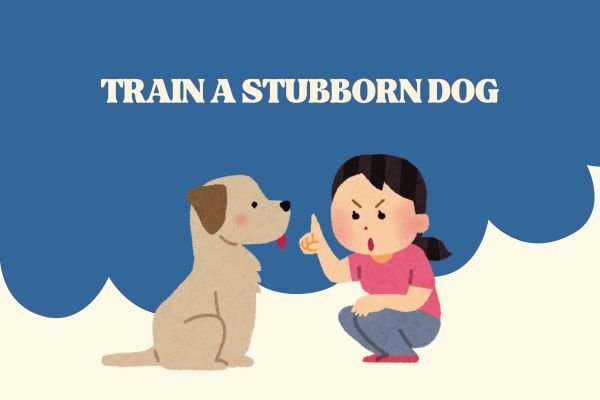
Some dogs pick up commands instantly—while others act like you’re speaking another language. If your dog ignores commands, walks away mid-training, or seems determined to do the opposite of what you ask, don’t worry. What we often call “stubborn” is usually a mix of confusion, excitement, lack of motivation, or inconsistent training.
The good news? Every dog—yes, every single one—can learn with the right strategy. This guide teaches you how to train a stubborn dog step-by-step, using techniques based on positive reinforcement, science-backed behavior training, and professional-level patience.
Understanding What “Stubborn” Really Means in Dogs
Why Dogs Seem Stubborn
Dogs rarely misbehave out of spite. Instead, they may be:
- Overstimulated
- Unmotivated
- Confused about the command
- Distracted by smells, sights, or sounds
- Not properly trained in different environments
- Lacking physical or mental stimulation
Learning Style Differences
Some breeds—like Huskies, Shiba Inus, and Terriers—are more independent. This doesn’t make them untrainable; it just means training must match their instincts.
Preparing for Training Before You Start
Choosing a Reward System
Find what motivates your dog the most:
- High-value treats (cheese, chicken)
- Tug toys
- Squeaky toys
- Praise and affection
A stubborn dog needs a reward worth working for.
Training Environment Setup
Start in:
- A quiet room
- A hallway
- Your backyard
Zero distractions = faster learning.
Step-by-Step Training Method for Stubborn Dogs
This sequence builds understanding, focus, and long-term obedience.
Step 1 – Build Focus Using “Watch Me”
Strong training starts with attention.
How to teach it:
- Hold a treat near your eyes.
- Say “Watch me.”
- When your dog makes eye contact—reward instantly.
Repeat daily for 3–5 minutes.
Step 2 – Teach Clear Marker Words
Marker words tell your dog the exact second they are correct.
Use:
- “Yes!”
- “Good!”
- Or a clicker
Fast, consistent communication = better learning.
Step 3 – Master Basic Commands Indoors
Teach commands like:
- Sit
- Down
- Stay
- Come
Indoors first! Stubborn dogs fail when trained in busy environments too early.
Step 4 – Add Mild Distractions Slowly
When your dog succeeds indoors:
- Add small distractions (toy on floor)
- Practice in different rooms
- Introduce low-noise environments
Never jump from quiet living rooms to busy parks immediately.
Step 5 – Increase Duration & Distance
Example:
Teach “Stay” for 1 second → 5 seconds → 10 seconds
Take 1 step back → 2 steps → 3 steps
This prevents failure and boosts reliability.
Step 6 – Train Outdoors With Leashed Control
Move to:
- Backyard
- Quiet street
- Empty park
Keep training short and rewarding.
Step 7 – Generalize Commands Everywhere
Dogs don’t generalize well.
That means “Sit” indoors ≠ “Sit” outdoors.
Practice:
- On walks
- In parking lots
- At pet-friendly stores
Soon, your stubborn dog responds everywhere.
How to Train Specific Behaviors in Stubborn Dogs
Teaching Sit & Stay
- Lure with treat
- Mark + reward
- Add “Stay” with tiny increments
- Always release with a cue (“Okay!”)
Teaching Come (Recall)
Use high-value rewards only.
Steps:
- Say “Come!”
- Use excited voice
- Reward heavily
- Never punish your dog after coming
Teaching Leave It
Impulse control reduces stubbornness dramatically.
- Place treat under your hand
- Dog tries to get it
- When they back off—mark + reward
- Add cue “Leave it”
Positive Reinforcement Techniques That Work Best
Reward Timing
Reward within 1 second of correct behavior.
Marker Words & Clickers
Clear, consistent messages = reliable behavior.
Treat Fading Strategy
Slowly reduce treats:
- Week 1: reward every time
- Week 2: reward every other time
- Week 3: random rewards
This maintains motivation without dependence.
Tools That Help With Stubborn Dogs
Clickers
Perfect for marking exact behaviors.
Long Training Leashes
Helps with:
- Recall
- Distance training
- Safe outdoor practice
No-Pull or Front-Clip Harness
Gives control without causing harm.
Fixing Common Problems During Training
Overexcitement
Solution:
- Pre-walk play
- Tug sessions
- Puzzle toys
Release energy first, then train.
Fear-Based “Stubbornness”
Scared dogs freeze or flee.
Signs:
- Tail tucked
- Whale eye
- Trembling
Use gentle encouragement, not pressure.
Motivation Issues
Try:
- Higher value treats
- Shorter sessions
- Training before meals
Some dogs simply need a better reason.
Mental & Physical Exercise for Better Training Results
Daily Walks & Play
A tired dog = a focused dog.
Puzzle Toys & Nose Work
Mental stimulation is key for intelligent breeds.
Short Training Sessions
Sessions should last:
- Puppies: 2–3 minutes
- Adults: 5–8 minutes
Quality > quantity.
Breed Tendencies That Affect Training
Independent Breeds
- Huskies
- Shiba Inu
- Akita
- Basenji
Need more patience and high-value rewards.
Easily Distracted Breeds
- Beagles
- Coonhounds
- Spaniels
Use structured environments and controlled exposure.
Mistakes Owners Make That Lead to Stubborn Behavior
Repeating Commands Too Often
Saying “Sit, sit, sit!” confuses dogs.
Training Too Long
Dogs lose focus and become resistant.
Using Harsh Punishment
Breaks trust. Increases fear. Slows learning.
Stick to positive reinforcement.
Also check: How to Train Your Dog to Stop Pulling During Walks
When to Call a Professional Trainer
Behavioral Red Flags
Seek help if your dog shows:
- Aggression
- Fear-based reactivity
- Severe resource guarding
- Inability to focus at all
Benefits of a Certified Trainer
They can:
- Identify hidden triggers
- Build personalized plans
- Accelerate results
FAQs
1. Can older dogs be trained even if they’re stubborn?
Yes! Age does not stop learning.
2. How long will it take to fix stubborn behavior?
2–8 weeks with consistency.
3. Should I use punishment?
No—positive reinforcement works better and builds trust.
4. Why does my dog listen at home but not outside?
They haven’t generalized the command yet.
5. How many training sessions per day?
2–3 short sessions work best.
6. Do certain breeds require different techniques?
Yes—independent breeds need more motivation.
Conclusion
Training a stubborn dog takes patience, structure, and the right mindset—but it’s absolutely achievable. When you understand your dog’s motivations, use the right tools, and follow a calm, step-by-step training plan, your dog will grow more responsive, confident, and well-behaved.
You don’t need harsh methods—just consistency, clear communication, and positive reinforcement.
A well-trained dog is not just obedient—they’re happier, calmer, and more connected to you.